Hiking vs Trekking: What’s the Difference?
Hiking and trekking are often used as if they mean exactly the same thing. Both involve walking outdoors, exploring natural environments, and spending time on trails or routes. In everyday conversation, the terms can overlap considerably.
However, there are some useful distinctions between them.
Generally, hiking refers to walking outdoors on a trail or established route, often for part of a day or a single day, while trekking often describes a longer journey that may involve multiple days, more varied terrain, and overnight stays.
That distinction is useful, but it is not a universal rule. Definitions can vary by country, region, tourism industry, outdoor community, and individual usage. A route called a “hike” in one place might be described as a “trek” somewhere else.
Instead of treating the two words as strict technical categories, it is more helpful to compare the typical characteristics associated with hiking and trekking.
What Is Hiking?
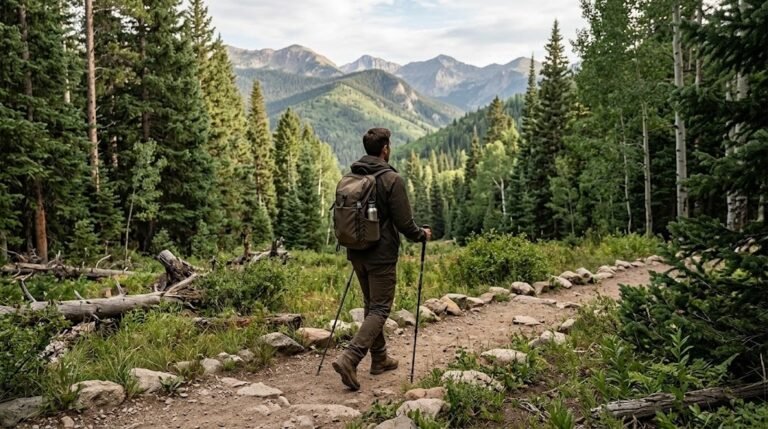
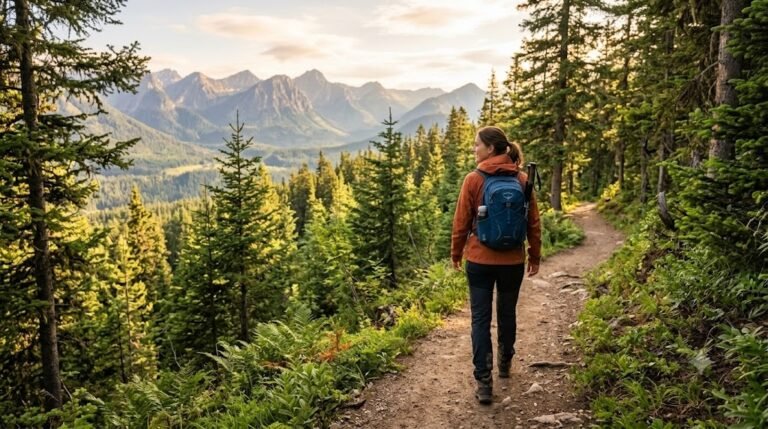
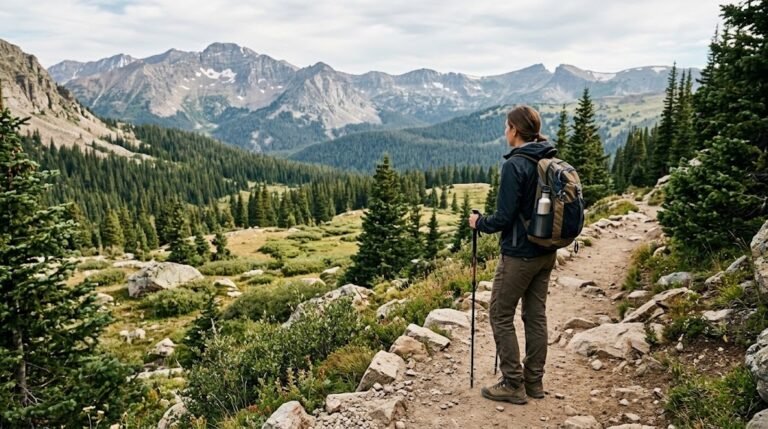
Hiking generally means walking outdoors for recreation, exercise, exploration, or enjoyment.
A hike can take place in many environments, including:
- Forests
- National or regional parks
- Hills
- Mountains
- Countryside
- Coastal areas
- Deserts
- Nature reserves
Hikes can range from short walks lasting an hour or two to demanding full-day routes.
Some hikes follow well-maintained paths with clear signs, while others involve steep, rocky, or uneven terrain.
A day hike does not normally require carrying camping equipment because the hiker returns to their starting point or another destination before the end of the day.
However, the term “hiking” is broad. A long or difficult hike can require substantial preparation even if it does not involve an overnight stay.
For beginners, hiking is often an accessible way to develop outdoor skills. A suitable local trail can provide an opportunity to learn about pacing, navigation, weather awareness, and trail etiquette without immediately committing to a multi-day journey.
If you are planning your first hike, see EarthTrek’s guide to Hiking for Beginners.
What Is Trekking?
Trekking generally refers to a longer walking journey, often lasting multiple days.
A trek may pass through remote or changing environments and can involve significant distances, elevation changes, or challenging terrain.
Unlike many day hikes, trekking often requires planning for overnight accommodation and carrying additional supplies.
Depending on the route, accommodation could include:
- Campsites
- Mountain huts
- Lodges
- Guesthouses
- Villages
- Other designated overnight facilities
Some treks involve carrying camping equipment and food. Others use established accommodation and may involve carrying a relatively lighter backpack.
Trekking is not necessarily more difficult than every hike. A short trek on a moderate route may be physically easier than a demanding single-day mountain hike.
The key difference is often the nature of the journey rather than simply how difficult it is.
Hiking vs Trekking: Key Differences
The following table summarizes common differences. These are general patterns rather than universal definitions.
| Feature | Hiking | Trekking |
|---|---|---|
| Duration | Often a few hours to one day | Often multiple days |
| Terrain | Can range from easy paths to difficult mountain routes | Often involves varied or remote terrain |
| Gear | Usually a lighter day pack | May require additional clothing, food, and overnight equipment |
| Planning | Often relatively straightforward | Usually requires more detailed logistics |
| Physical demands | Can range from easy to very strenuous | Often requires sustained effort over several days |
| Accommodation | Usually returns to starting point or daily accommodation | Often includes overnight stays along the route |
| Beginner suitability | Many beginner-friendly options | Usually better after developing basic hiking skills |
Now let’s look at these differences in more detail.
Duration
Duration is one of the most common ways people distinguish hiking from trekking.
A hike is often completed within a day. You might leave home in the morning, spend several hours walking, and return home or to your accommodation that same day.
A trek is more commonly a journey spread across multiple days.
For example, imagine two routes:
Route A: A six-hour mountain loop that starts and finishes at the same trailhead.
Route B: A four-day journey between several mountain settlements.
Route A would commonly be described as a hike, while Route B would commonly be described as a trek.
But duration alone does not create a universal definition. Some outdoor communities use “hike” for multi-day journeys, while others use “trek” for certain long-distance routes regardless of whether accommodation is involved.
Terrain
Both hiking and trekking can involve almost any type of terrain.
A hike might follow:
- Paved or maintained paths
- Forest trails
- Rocky mountain paths
- Coastal routes
- Desert tracks
- Steep hills
Trekking may involve several types of terrain during one journey.
A multi-day trek could pass through forests, valleys, mountain passes, villages, and exposed sections.
However, it is a misconception that trekking automatically means extreme terrain.
A trek can be relatively moderate, while a single-day hike can involve steep and technically challenging terrain.
When deciding whether a route is suitable, look beyond the label. Check its actual distance, elevation, terrain, weather conditions, and navigation requirements.
Equipment
Equipment is another area where the two activities often differ.
A typical day hike may require:
- Water
- Food or snacks
- Navigation tools
- First-aid supplies
- Appropriate footwear
- Weather protection
- Sun protection
- Phone
- Small backpack
A multi-day trek may require additional equipment such as:
- Extra clothing
- More food
- Sleeping equipment
- Camping equipment when required
- Cooking equipment where appropriate
- Larger water capacity
- More comprehensive navigation equipment
- Additional emergency supplies
The exact equipment depends on the route.
A supported trek where accommodation and meals are provided can require much less personal gear than an unsupported expedition where participants carry their own tent, food, and other supplies.
For a practical day-hiking equipment guide, see What to Pack for a Day Hike.
Physical Demands
Neither hiking nor trekking has a fixed level of difficulty.
A short, flat hike may be relatively easy, while a steep mountain hike can be extremely demanding.
Trekking creates a different challenge because physical effort is repeated over several days.
During a trek, you may need to manage:
- Daily walking distance
- Recovery between days
- Backpack weight
- Elevation gain
- Sleep and rest
- Food and hydration
- Changing weather
This means endurance and pacing can become particularly important.
Someone who can comfortably complete a difficult day hike may still need preparation before attempting a multi-day trek.
The opposite can also be true. A person with strong endurance may find a moderate trek manageable even if they are not particularly fast.
Planning and Preparation
Planning requirements often increase as the journey becomes longer and more remote.
For a simple day hike, you may only need to research:
- Route
- Weather
- Trail conditions
- Transportation
- Water
- Estimated duration
- Emergency contacts
A multi-day trek can require considerably more planning.
You may need to organize:
- Daily stages
- Overnight accommodation
- Food
- Water sources
- Resupply points
- Transportation
- Permits
- Weather contingencies
- Communication
- Emergency plans
The more remote the route, the more important detailed planning becomes.
Before any outdoor trip, check current information from official trail managers, parks, land-management authorities, or other reliable local sources.
Accommodation
Accommodation is one of the clearest practical differences between many hikes and treks.
Most day hikes do not require overnight accommodation on the trail. You return to your home, hotel, or another base at the end of the day.
Trekking frequently involves staying somewhere along the route.
Depending on the destination, this might mean:
- Camping
- Mountain huts
- Refuges
- Lodges
- Guesthouses
- Local accommodation
Some treks are fully supported, meaning accommodation and meals may be arranged in advance.
Others are self-supported, requiring participants to carry most of what they need.
This distinction can have a major effect on backpack weight and preparation.
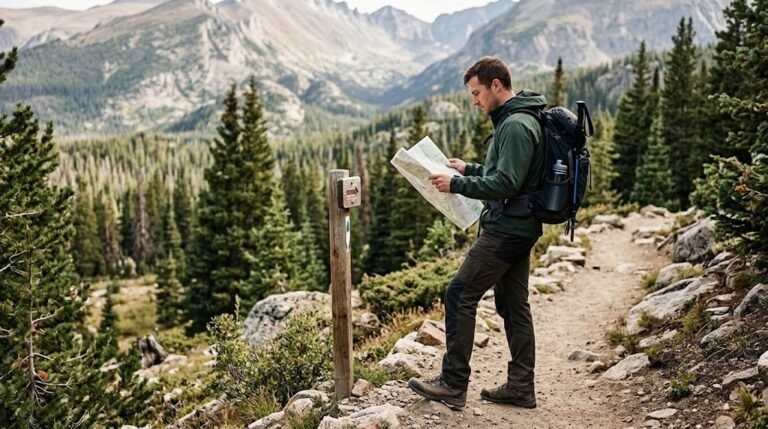
Navigation
Navigation is important for both activities.
On a well-marked day-hiking trail, navigation may be relatively straightforward. However, hikers should still understand their route rather than assuming that signs will always be available.
Trekking routes can require more navigation because they may cover greater distances and pass through areas where trail markings are less obvious.
Useful navigation tools can include:
- Offline digital maps
- Physical maps
- Compass
- Trail markers
- Route descriptions
- GPS devices where appropriate
The more remote the route, the more important it becomes to understand how to navigate independently.
Never rely exclusively on mobile phone coverage, particularly in remote areas.
Which Is Better for Beginners?
For most people with little outdoor experience, hiking is the easier place to start.
A beginner can choose a short, well-established trail and learn important skills without immediately dealing with overnight logistics.
A good first hike can teach you:
- How your body responds to walking uphill
- How much water you need
- How to pace yourself
- How your footwear performs
- How to read a trail map
- How weather affects your comfort
- What equipment you actually use
Once you are comfortable with day hikes, you can gradually consider longer routes.
That does not mean beginners can never go trekking. A beginner-friendly, organized trek with experienced guides, established accommodation, and appropriate support may be accessible to someone who has limited hiking experience.
The route and support structure matter more than the label alone.
How to Choose Between Hiking and Trekking
Ask yourself a few simple questions.
How Much Time Do You Have?
If you have only a few hours or one day, hiking is likely to be the practical choice.
If you have several days available, trekking may be an option.
How Much Planning Do You Want?
If you prefer a simpler outdoor outing, a day hike may be easier to organize.
If you enjoy detailed travel planning, a multi-day trek can provide a more immersive experience.
What Is Your Experience Level?
If you are new to outdoor activities, start with manageable hikes and develop your skills gradually.
How Remote Is the Route?
Remote locations require more careful preparation regardless of whether the trip is called a hike or trek.
What Kind of Experience Do You Want?
A hike can be ideal for enjoying nature during a few hours outdoors.
A trek can provide a longer journey where the route itself becomes a major part of the travel experience.
Common Misconceptions
“Trekking Is Always Harder Than Hiking”
Not necessarily.
Difficulty depends on distance, elevation, terrain, weather, route conditions, and individual fitness.
“Hiking Is Only for Short Walks”
No.
Hikes can be long and physically demanding. The word does not automatically mean an easy walk.
“Trekking Always Means Camping”
No.
Some treks use hotels, lodges, guesthouses, mountain huts, or other forms of accommodation.
“You Need Expensive Equipment to Trek”
Not always.
Equipment requirements depend heavily on the route and whether accommodation, food, and other services are provided.
“Everyone Uses the Terms the Same Way”
Definitely not.
Terminology varies between regions, cultures, outdoor communities, tourism operators, and individual hikers.
That is why it is better to examine the actual characteristics of a route rather than relying only on whether it is marketed as a “hike” or “trek.”
Final Takeaway
Hiking and trekking overlap considerably, and there is no single worldwide definition that perfectly separates the two.
In common usage, hiking often describes an outdoor walking activity that can be completed within a day, while trekking often describes a longer journey that may continue for several days and involve overnight accommodation.
But the distinction is flexible.
A challenging day hike can be more physically demanding than a moderate multi-day trek. Similarly, a supported trek may require less personal equipment than an independent day hike in a remote environment.
When choosing an outdoor route, focus on what actually matters:
- Distance
- Terrain
- Elevation
- Weather
- Navigation
- Equipment
- Accommodation
- Your experience and fitness
- Remoteness
- Local conditions
If you are just getting started, a manageable day hike is an excellent way to build confidence and learn basic outdoor skills. As your experience grows, longer and more complex journeys can become natural next steps.
For more beginner guidance, explore EarthTrek’s Hiking for Beginners and Hiking Safety Tips guides before planning your next adventure.
Whether you call it a hike or a trek, the most important thing is to choose a route that matches your abilities, prepare appropriately, respect the environment, and enjoy the journey.